
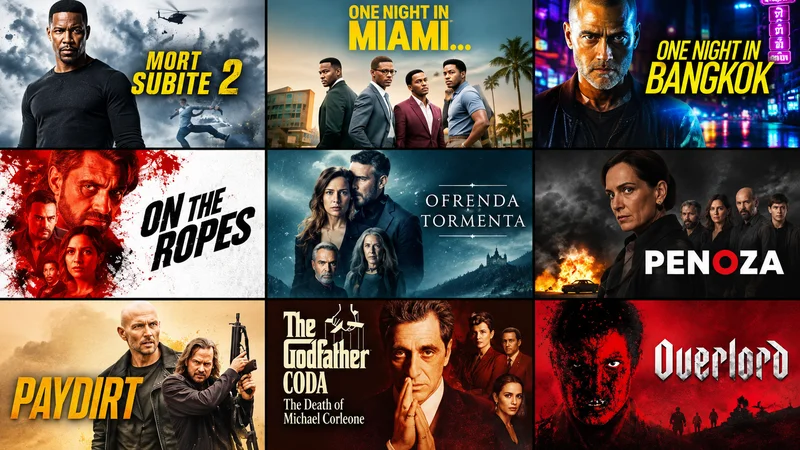
The best ever crime movies can make a family dinner feel as tense as a bank robbery, or turn a missing-person case into a question about justice itself. Start with The Godfather for an influential gangster epic, Heat for a masterful cops-and-robbers confrontation, or Se7en for an unsettling mystery. For an international perspective, City of God and Memories of Murder are essential choices.
At ShortMax, this list brings together 40 feature films spanning classic Hollywood noir, mafia dramas, meticulously planned heists, police investigations, and crime cinema from around the world. Each selection includes quick highlights followed by a spoiler-conscious description and an explanation of its particular appeal.
This guide to the best ever crime movies is an editorial collection, not a calculation of IMDb scores or box-office revenue. Its broad definition includes gangster films, heist thrillers, detective mysteries, and stories about corruption. Many titles contain graphic violence or disturbing subject matter; the right film depends on whether you want action, procedural detail, psychological suspense, or historical atmosphere.
What Defines a Great Crime Movie?
- Subgenre: Gangster saga, heist, police procedural, film noir, or psychological crime thriller.
- Central conflict: Criminal ambition, investigation, betrayal, institutional corruption, or moral compromise.
- Storytelling: Distinctive characters, credible stakes, and suspense built through choices rather than arbitrary twists.
- Atmosphere: From postwar black-and-white cities to modern streets and international settings.
- Audience fit: A balance of accessible classics and more demanding films for mature viewers.
The American Film Institute’s gangster category emphasizes organized crime and individual criminals, but our list uses a wider definition. A police investigation, a failed robbery, or a psychological manipulation plot can also sustain an excellent crime film. Selection weighs lasting influence, storytelling craft, distinctiveness, and the strength of the criminal conflict rather than treating popularity as the only measure.
Mob Movies, Mafia Families, and Gangster Empires
- Organized-crime stories about family loyalty, power, ambition, and betrayal.
- Characters whose pursuit of status gradually damages ordinary relationships.
- Best for viewers seeking complex antiheroes, violent consequences, and long-form drama.
Gangster cinema is one major branch of the best ever crime movies, but it is not the entire genre. These nine titles range from deliberate family epics to kinetic stories about life inside criminal organizations.
1. The Godfather (1972)
- Genre / Style: Gangster epic.
- Central Appeal: Family loyalty and succession.
- Recommended For: Patient, character-rich drama.
Don Vito Corleone presides over a powerful New York crime family while his youngest son, Michael, initially hopes to remain outside its business. An attack on the family forces Michael toward a world where favors, personal debts, and violence become inseparable. Francis Ford Coppola gives the family relationships as much attention as criminal operations.
This belongs at the front of any serious crime selection because its central question is not simply who controls an empire. It asks how power changes someone who believes he can resist it. Watch for the contrasting performances of Marlon Brando and Al Pacino and for the measured pace that makes each decision consequential.
2. The Godfather Part II (1974)
- Genre / Style: Gangster saga.
- Central Appeal: Parallel generations.
- Recommended For: Viewers who have seen The Godfather.
The sequel follows Michael Corleone as he consolidates power while a second narrative traces young Vito Corleone from Sicily to the United States. Robert De Niro plays the younger Vito, providing a contrast to the increasingly isolated Michael. The result is a story about criminal influence acquired in different eras.
Rather than repeating the first film, Coppola makes the family empire look more expansive and more corrosive. Its parallel structure invites viewers to compare survival with ambition and to question what success has cost the characters. Start with the 1972 film; the emotional impact of this follow-up depends on knowing the Corleones.
3. Goodfellas (1990)
- Genre / Style: Mob biography.
- Central Appeal: Fast, seductive, then frightening.
- Recommended For: Crime from an insider perspective.
Henry Hill grows up fascinated by the mobsters in his Brooklyn neighborhood and eventually becomes part of their organization. Ray Liotta narrates his ascent alongside characters played by Robert De Niro and Joe Pesci. The glamorous surface of gangster life gradually gives way to paranoia, addiction, and treacherous alliances.
Martin Scorsese gives the film an astonishing sense of momentum through music, voice-over, and long tracking shots. That kinetic style is not an endorsement of the characters; it makes the attraction of power understandable before exposing its instability. Choose Goodfellas when you want an energetic introduction to mob cinema.
4. Casino (1995)
- Genre / Style: Organized crime drama.
- Central Appeal: Las Vegas wealth and control.
- Recommended For: Stories of fraud, love, and betrayal.
Gambling expert Sam Rothstein runs a Las Vegas casino on behalf of the mob, but the apparent stability of the business is threatened by his volatile friend Nicky and his difficult marriage to Ginger. Robert De Niro, Joe Pesci, and Sharon Stone lead the sprawling portrait of money and influence.
The film is especially compelling as a study of systems: criminal networks depend on seemingly legitimate businesses, and personal recklessness can destroy elaborate arrangements. Scorsese uses vivid period detail and sharp narration to show how glamour and corruption coexist. It is longer and more expansive than a standard crime thriller.
5. Scarface (1983)
- Genre / Style: Gangster rise-and-fall.
- Central Appeal: Excessive and violent ambition.
- Recommended For: An antihero driven by power.
Cuban immigrant Tony Montana enters Miami criminal circles and becomes increasingly ambitious within the cocaine trade. Al Pacino plays him with deliberately outsized intensity, surrounded by a world of conspicuous wealth, suspicion, and escalating violence. Brian De Palma turns Tony’s rise into a portrait of unchecked appetite.
Its quotable bravado has made the character a pop-cultural symbol, but the movie also depicts the destructive costs of his choices. Expect a heightened tone, strong language, and graphic violence rather than the measured restraint of The Godfather. It works best as a cautionary study of excess and paranoia.
6. The Departed (2006)
- Genre / Style: Undercover crime thriller.
- Central Appeal: Double infiltration.
- Recommended For: Constant uncertainty over loyalty.
A Massachusetts police recruit infiltrates an Irish American criminal organization, while a member of that organization operates inside the state police. Leonardo DiCaprio and Matt Damon portray men whose secret identities place them under relentless pressure, with Jack Nicholson as the dangerous mob boss at the center.
Scorsese adapts the premise of Hong Kong film Infernal Affairs into a Boston setting with its own social texture. The tension comes from watching two hidden lives become harder to maintain as both sides hunt for a mole. It is a particularly accessible choice for viewers who want betrayal and suspense.
7. Donnie Brasco (1997)
- Genre / Style: Undercover Mafia drama.
- Central Appeal: Friendship versus duty.
- Recommended For: A story based on an FBI operation.
FBI agent Joseph Pistone adopts the identity of jewel thief Donnie Brasco and gains access to a New York Mafia crew. His relationship with veteran gangster Lefty becomes increasingly personal as the assignment continues. Johnny Depp and Al Pacino make the bond more emotionally complicated than a routine undercover plot.
The film’s strength is the moral discomfort of deception. Lefty can be dangerous and sympathetic without becoming an innocent victim, while the agent must recognize how his professional success could harm someone who trusts him. Choose this for character-focused crime drama rather than constant shootouts.
8. Carlito’s Way (1993)
- Genre / Style: Ex-con thriller.
- Central Appeal: The desire to escape crime.
- Recommended For: Fatalism and romantic hope.
Former drug dealer Carlito Brigante leaves prison determined to start over, but the social network surrounding his old life makes that ambition difficult. Al Pacino portrays a man whose loyalty to familiar people continually tests his desire for a legitimate future. His connection with Gail offers a reason to change.
Brian De Palma creates suspense by making the possibility of escape feel fragile from the beginning. Compared with Scarface, the central figure is less interested in acquiring more power than in surviving the consequences of past choices. Choose it for a moving, tense portrait of attempted redemption.
9. Pulp Fiction (1994)
- Genre / Style: Interconnected crime tales.
- Central Appeal: Dark humor and nonlinear storytelling.
- Recommended For: Memorable dialogue.
Two hitmen, a boxer, a gangster’s wife, and a pair of small-time robbers cross paths in a series of connected Los Angeles stories. Quentin Tarantino arranges the events out of chronological order, using conversations and unexpected reversals to give each criminal encounter its own character.
The movie is not a conventional investigation or mob rise-and-fall story. It belongs here because it turns the routines, mistakes, and moral choices of criminals into an inventive narrative puzzle. Choose it for sharp dialogue and dark comedy, with the warning that sudden violence and explicit language are central to its style.
Heist Movies and High-Stakes Robbery Thrillers

The best ever crime movies about robbery make preparation as suspenseful as the theft itself. Some focus on near-perfect logistics; others find drama in the personalities who make even a clever plan unstable.
10. Heat (1995)
- Genre / Style: Heist and police thriller.
- Central Appeal: Professional rivals.
- Recommended For: A celebrated bank-robbery sequence.
Master thief Neil McCauley leads a disciplined robbery crew while Los Angeles detective Vincent Hanna pursues him. Robert De Niro and Al Pacino give the two men different personalities but strikingly similar devotion to their work. Their conflict expands beyond a simple contest between good and evil.
Michael Mann makes logistics, surveillance, and the city itself essential to the tension. The film also considers what obsessive professional commitment does to families and relationships. Choose it when you want a substantial, action-oriented crime epic with carefully developed characters on both sides of the law.
11. Rififi (1955)
- Genre / Style: French heist noir.
- Central Appeal: Meticulous planning.
- Recommended For: A famous nearly silent robbery.
Four criminals plan an ambitious jewelry-store burglary in Paris, relying on patience and precise coordination. Jules Dassin builds the central robbery sequence with astonishing attention to sound and physical detail. The tension arises from watching an elaborate plan approach the point where any small mistake matters.
The movie is often praised for the technical confidence of its heist scenes, but it is also a hard-edged story about loyalty and what follows a criminal success. Watch it if you enjoy procedural detail and can appreciate black-and-white cinema without expecting frantic modern editing.
12. Le Cercle Rouge (1970)
- Genre / Style: French crime noir.
- Central Appeal: Minimalist and coolly controlled.
- Recommended For: Thieves versus a determined inspector.
A recently released thief joins forces with an escaped prisoner and an alcoholic former police officer for an elaborate robbery. Alain Delon, Gian Maria Volontè, and Yves Montand play the unlikely crew. Jean-Pierre Melville balances their careful preparations against the pressure of a continuing police pursuit.
Long stretches of observation are more important than explanatory speeches here. The robbery becomes a test of discipline, and the characters’ professionalism cannot shield them from their personal histories. Choose it for atmospheric crime filmmaking with an understated pace rather than a light caper.
13. The Killing (1956)
- Genre / Style: Racetrack heist noir.
- Central Appeal: Fragmented chronology.
- Recommended For: Every plan has a weak link.
Johnny Clay assembles a crew to rob a racetrack, giving each participant a particular job in what appears to be a carefully timed operation. Stanley Kubrick revisits overlapping events from different viewpoints, revealing details that reshape how viewers understand the plan.
The film’s structure makes uncertainty part of the viewing experience: you understand more than any single character, yet the outcome remains difficult to predict. At a compact running time, it is an excellent introduction to classic heist noir and to Kubrick’s early precision.
14. The Asphalt Jungle (1950)
- Genre / Style: Classic American noir.
- Central Appeal: An ensemble of criminals.
- Recommended For: The cost of greed and bad judgment.
After leaving prison, criminal planner Doc Riedenschneider organizes a jewel robbery with the help of a diverse group of accomplices. John Huston pays close attention to the preparation, interpersonal pressures, and fragile trust required by the operation. The criminal team is far from a single unified force.
This early heist film helped establish the familiar pattern of specialists recruited for a risky job. Its deeper interest is how individual weaknesses complicate collective ambition. Choose it for a foundational work that makes ordinary human decisions feel as dangerous as police pursuit.
15. Reservoir Dogs (1992)
- Genre / Style: Botched heist thriller.
- Central Appeal: Suspicion among criminals.
- Recommended For: Violent, dialogue-driven tension.
After a diamond robbery goes wrong, surviving members of the crew gather in a warehouse and try to determine whether someone betrayed them. Quentin Tarantino largely avoids showing the robbery itself, focusing instead on what the aftermath reveals about fear and mistrust.
The confined setting makes every accusation important, while the film’s fractured chronology deepens uncertainty about the characters’ histories. It is influential precisely because it finds suspense in conversation and conflicting accounts. Choose it for a lean, aggressive crime thriller with graphic violence.
16. The Town (2010)
- Genre / Style: Boston robbery thriller.
- Central Appeal: Personal ties versus criminal obligation.
- Recommended For: Large-scale action scenes.
A member of a Charlestown bank-robbing crew begins a relationship with a woman who was present during one of its crimes. Ben Affleck directs and stars as a man struggling to separate his ambitions from the people and habits surrounding him. The FBI investigation increases the pressure on the crew.
The movie combines accessible action with a romantic subplot that complicates its criminal protagonist’s choices. Its strongest moments are the carefully staged robberies and the sense that leaving a neighborhood’s established networks is difficult. Choose it for a modern, energetic heist thriller.
17. Inside Man (2006)
- Genre / Style: Hostage and heist mystery.
- Central Appeal: Negotiation and misdirection.
- Recommended For: A battle of competing strategies.
A meticulously planned bank robbery turns into a hostage crisis, drawing police negotiator Keith Frazier into a contest with the unusually composed leader of the thieves. Denzel Washington and Clive Owen lead a puzzle built around appearances and competing agendas.
Spike Lee uses the confined bank setting to keep audiences questioning what the criminals are actually trying to accomplish. Dialogue and strategic misdirection drive much of the suspense, making this an attractive choice for viewers who prefer clever planning over relentless gunfire.
18. Dog Day Afternoon (1975)
- Genre / Style: Real-event-inspired bank robbery drama.
- Central Appeal: Media pressure and human desperation.
- Recommended For: Performance-led suspense.
Sonny and Sal attempt to rob a Brooklyn bank, but their poorly conceived plan quickly becomes a prolonged standoff involving hostages, police, and television cameras. Al Pacino plays Sonny with a blend of vulnerability, impulsiveness, and rising frustration in Sidney Lumet’s film.
Rather than glorifying a technically brilliant robbery, the movie observes people trapped by their own decisions as public attention grows. It is also a portrait of the era’s social tensions. Choose it if you want a crime story driven by human behavior and unpredictable negotiation.
When Crime Thrillers Cross Into Action and Romance
Crime films often borrow from neighboring genres. Heat and The Town include large-scale action, while several heist stories introduce love or family commitments that complicate a criminal plan. These elements can add emotional stakes without turning the central story into a romance.
For movies where relationships play a more prominent role alongside danger, explore our best action romance movies guide. That companion list focuses on attraction and partnership, whereas the films here place crime and its consequences at the center.
Detective Movies, Police Investigations, and Serial-Killer Cases
- Murder mysteries, corruption inquiries, and evidence that changes meaning.
- Strong contrasts between methodical investigation and personal obsession.
- Often dark, disturbing films intended for mature viewers.
Investigation-centered stories shift the attention from committing a crime to understanding what happened and what can actually be proved. The best ever crime movies in this group resist tidy answers and confront the price of pursuing them.
19. Se7en (1995)
- Genre / Style: Serial-killer thriller.
- Central Appeal: Bleak and disturbing.
- Recommended For: An investigation organized around deadly sins.
Detectives Somerset and Mills investigate a series of murders whose elaborate staging points to a killer using the seven deadly sins as a guiding idea. Morgan Freeman and Brad Pitt portray contrasting approaches to police work as the case challenges both men.
David Fincher creates a relentlessly grim environment where the investigation becomes a confrontation with despair and cruelty. The film’s lasting influence comes from its atmosphere and moral questions, not only its mystery. Viewers sensitive to gruesome crime scenes should choose another title.
20. Zodiac (2007)
- Genre / Style: True-crime procedural.
- Central Appeal: Obsessive investigation.
- Recommended For: Uncertainty and unresolved evidence.
In the late 1960s and beyond, reporters and investigators pursue the Zodiac killer, whose communications and crimes trouble Northern California. Jake Gyllenhaal plays cartoonist Robert Graysmith, whose interest in the case becomes increasingly consuming. The film tracks years of overlapping leads and institutional obstacles.
Fincher resists turning complex history into a neat detective triumph. The tension is often in files, witness accounts, and the limits of what can be proven. Choose it for patient procedural storytelling and remember that its dramatic reconstruction should not be treated as a substitute for the real case record.
21. The Silence of the Lambs (1991)
- Genre / Style: Psychological crime thriller.
- Central Appeal: FBI trainee and imprisoned killer.
- Recommended For: Intense conversations.
FBI trainee Clarice Starling seeks information from imprisoned psychiatrist and murderer Hannibal Lecter while investigators search for another serial killer. Jodie Foster and Anthony Hopkins give their conversations an unnerving mix of intelligence, manipulation, and danger.
Jonathan Demme builds dread as much through close-ups and power shifts as through the investigation itself. Clarice’s determination is central to the movie, and the criminal psychology never becomes harmless spectacle. Choose it for an influential thriller, but expect disturbing material and adult themes.
22. Prisoners (2013)
- Genre / Style: Kidnapping crime thriller.
- Central Appeal: Fear and moral compromise.
- Recommended For: A relentless, bleak atmosphere.
When two young girls disappear, a desperate father begins taking increasingly extreme steps while detective Loki works through evidence and conflicting leads. Hugh Jackman and Jake Gyllenhaal represent different responses to uncertainty, with family anguish pressing against professional investigation.
Denis Villeneuve’s film asks how far people will go when they believe time is running out. Its atmosphere and performances make the moral pressure difficult to dismiss. Choose it for serious suspense; the child-abduction premise and violence make it unsuitable for casual viewing.
23. L.A. Confidential (1997)
- Genre / Style: Neo-noir police mystery.
- Central Appeal: Corruption in 1950s Los Angeles.
- Recommended For: Three conflicting detectives.
Three police officers with different methods become entangled in a murder investigation in 1950s Los Angeles. Their competing ambitions expose connections among organized crime, media spectacle, and corruption. Russell Crowe, Guy Pearce, and Kevin Spacey lead an intricate ensemble.
Curtis Hanson makes period atmosphere an essential part of the story, showing the gulf between Hollywood glamour and institutional misconduct. The mystery rewards attention to alliances and motives rather than simply waiting for a suspect to appear. Choose it for polished, multilayered detective storytelling.
24. The French Connection (1971)
- Genre / Style: Police procedural and action.
- Central Appeal: Narcotics investigation.
- Recommended For: A famously urgent chase.
New York detectives Popeye Doyle and Buddy Russo pursue a heroin-smuggling network with connections to France. Gene Hackman plays the abrasive, obsessive Doyle, whose instincts may be useful even when his methods are troubling. William Friedkin gives the investigation a rough urban texture.
The movie is important for its location shooting and breathless pursuit sequences, but also for its unflattering portrait of law enforcement. Choose it when you want the physical immediacy of early-1970s crime cinema, while keeping a critical eye on the protagonist’s conduct.
25. The Usual Suspects (1995)
- Genre / Style: Crime mystery.
- Central Appeal: An unreliable account.
- Recommended For: A lineup of suspicious criminals.
After a deadly incident involving a ship, a survivor describes how a group of criminals became connected to an elusive underworld figure. Kevin Spacey plays the informant whose account guides much of the film. The narrative moves between interrogation and reconstructed events.
Its principal pleasure is considering how a story changes when the person telling it has an interest in shaping what others believe. Avoid spoilers before viewing because the storytelling mechanism matters enormously. Choose it for a dialogue-heavy crime puzzle rather than a straightforward detective procedural.
26. Memento (2000)
- Genre / Style: Neo-noir mystery.
- Central Appeal: Short-term memory loss.
- Recommended For: Fragmented chronology.
Leonard tries to identify the person responsible for his wife’s death while living with a condition that prevents him from forming new long-term memories. Notes, photographs, and tattoos become tools for maintaining his investigation. Guy Pearce plays a protagonist who cannot reliably connect his immediate experience to the past.
Christopher Nolan’s structure forces viewers to examine the difference between evidence and interpretation. The story is not just an unusual memory gimmick; it asks how personal motives shape the truths people accept. Choose it when you want an intellectually engaging crime narrative that rewards close attention.
27. Chinatown (1974)
- Genre / Style: Neo-noir detective classic.
- Central Appeal: Water, wealth, and corruption.
- Recommended For: A troubling mystery.
Private detective Jake Gittes takes a seemingly routine case involving suspected infidelity, then discovers that the investigation touches powerful interests connected to Los Angeles water supplies. Jack Nicholson plays a man whose professional confidence is challenged by the reach of the conspiracy.
The film’s historical setting and dense plot make local politics feel personally dangerous. Its influence on detective cinema is immense, though its themes include exploitation and abuse. Choose it for a challenging mystery that steadily expands from a private case into institutional corruption.
Film Noir, Dark Morality, and Crime Stories With a Twist
- Classic shadowy detective films alongside later psychological thrillers.
- Deception, greed, identity, and choices with unexpected consequences.
- A wider tonal range, including dry humor and a relatively playful caper.
Not every crime story needs a gang or a police task force. These best ever crime movies build suspense from manipulation, fate, and flawed assumptions, showing how noir ideas continued changing across the decades.
28. Double Indemnity (1944)
- Genre / Style: Film noir.
- Central Appeal: Insurance fraud and murder.
- Recommended For: A fatal alliance.
Insurance salesman Walter Neff becomes involved with Phyllis Dietrichson, who proposes a scheme to profit from her husband’s death. Fred MacMurray and Barbara Stanwyck create a relationship driven by attraction and calculation, while Edward G. Robinson plays the investigator whose suspicion threatens their plan.
Billy Wilder’s noir classic is valuable for its precise dialogue and the way desire erodes judgment. Rather than glamorizing clever fraud, it tracks the tightening consequences of a dishonest choice. Choose it as an ideal gateway to black-and-white crime thrillers.
29. The Maltese Falcon (1941)
- Genre / Style: Private-eye noir.
- Central Appeal: Deceptive clients and competing criminals.
- Recommended For: A coveted statuette.
Detective Sam Spade accepts a case that draws him into a struggle over a valuable statuette. Humphrey Bogart gives Spade an outwardly composed manner as a succession of clients and criminals offer contradictory stories. John Huston directs this influential adaptation of Dashiell Hammett’s novel.
The mystery is enjoyable because nearly everyone has a reason to mislead the detective, and the dialogue keeps their motives in motion. Choose it if you want the classic private-eye template: a hardboiled protagonist, uncertain loyalties, and suspense built through information rather than explosions.
30. The Third Man (1949)
- Genre / Style: British postwar noir.
- Central Appeal: Vienna black market.
- Recommended For: A missing friend and troubling secrets.
Writer Holly Martins arrives in divided postwar Vienna to visit Harry Lime, only to learn that his friend has died under suspicious circumstances. The search for answers draws him into black-market dealings and competing accounts of what happened. Joseph Cotten and Orson Welles anchor the story.
Carol Reed uses shadowy streets and striking camera angles to make a city under occupation feel morally unstable. Anton Karas’s zither score provides an unusual counterpoint to the darkness. Choose it for classic European noir with a memorable sense of place and questions about friendship.
31. Fargo (1996)
- Genre / Style: Crime comedy thriller.
- Central Appeal: Ordinary greed gone wrong.
- Recommended For: A sharp contrast between violence and decency.
A financially troubled salesman arranges to have his wife kidnapped in a scheme that spirals into violence. Pregnant police chief Marge Gunderson investigates the resulting crimes with patient attention to people’s behavior. Frances McDormand brings warmth and intelligence to the role.
The Coen brothers combine grim events with absurdly ordinary conversations, creating a tone unlike a typical action thriller. The snowy Minnesota setting emphasizes how senseless greed looks against everyday life. Choose Fargo for an unusual mix of suspense, uncomfortable humor, and moral clarity.
32. No Country for Old Men (2007)
- Genre / Style: Neo-western crime thriller.
- Central Appeal: Stolen drug money.
- Recommended For: A relentless pursuit.
After finding the aftermath of a drug deal gone wrong, Llewelyn Moss takes a case of money and becomes a target for the terrifying Anton Chigurh. A veteran sheriff tries to understand the violence crossing his territory. Josh Brolin, Javier Bardem, and Tommy Lee Jones lead the film.
The Coen brothers avoid easy comforts, using long periods of quiet to make sudden danger more startling. The story explores chance, aging, and moral uncertainty through a crime-driven pursuit. Choose it for austere suspense and a haunting atmosphere, not a conventional hero-versus-villain victory.
33. Gone Girl (2014)
- Genre / Style: Psychological crime mystery.
- Central Appeal: A missing wife and media pressure.
- Recommended For: Unreliable appearances.
When Amy Dunne disappears, attention turns toward her husband Nick as investigators and television coverage scrutinize their marriage. Ben Affleck and Rosamund Pike portray a couple whose carefully managed public image contrasts with a far more troubled private reality.
David Fincher blends a disappearance mystery with satire about celebrity, gender expectations, and the stories people tell about relationships. Its dark twists are best discovered without advance explanation. Choose it for a tense, adult thriller where manipulation matters more than physical pursuit.
34. The Sting (1973)
- Genre / Style: Period crime caper.
- Central Appeal: Two con artists.
- Recommended For: Elaborate deception and playful style.
During the Great Depression, two grifters join forces to target a powerful criminal after a personal tragedy. Paul Newman and Robert Redford make their partnership appealing, while an elaborate confidence game supplies the film’s central suspense. George Roy Hill treats criminal strategy with mischievous elegance.
Its tone provides welcome variety among darker thrillers on this list. Rather than relying on gruesome violence, it builds anticipation through preparation, role-playing, and carefully staged misdirection. Choose it if you want a clever, entertaining crime movie that is relatively light on graphic intensity.
International Crime Movies Beyond Hollywood
- Crime films from Brazil, Hong Kong, South Korea, France, Italy, and Argentina.
- Distinct national contexts including social inequality, police practices, and prison power.
- Excellent for viewers ready for subtitles and challenging material.
The best ever crime movies extend far beyond American gangs and detective traditions. These six films demonstrate how filmmakers around the world use crime to explore the particular histories and institutions of their societies.
35. City of God (2002)
- Genre / Style: Brazilian crime drama.
- Central Appeal: Neighborhood violence over decades.
- Recommended For: Youth and organized crime.
In Rio de Janeiro’s Cidade de Deus neighborhood, aspiring photographer Rocket observes the rise of violent gangs and the different paths taken by young people around him. Fernando Meirelles and Kátia Lund give the story an urgent visual style while following the growth of criminal influence over time.
The film’s force comes from showing how violence shapes a community, not merely from its fast editing. It does not offer a detached celebration of gangster power. Choose it for a disturbing, vividly realized international crime drama, with the warning that violence involving children is part of the story.
36. Infernal Affairs (2002)
- Genre / Style: Hong Kong undercover thriller.
- Central Appeal: A mole on each side.
- Recommended For: Identity and divided loyalty.
A police officer works undercover inside a triad organization while a triad member operates within the police force. Andy Lau and Tony Leung portray men whose lives have been shaped by secrecy for years. As suspicion grows, both search for the hidden opponent who threatens to expose them.
The tightly constructed plot keeps attention on the psychological cost of maintaining false identities. It inspired the later American film The Departed, but remains worthwhile for its efficient pacing and distinct Hong Kong atmosphere. Choose it for suspense and an unusually balanced look at both sides of infiltration.
37. Memories of Murder (2003)
- Genre / Style: South Korean crime procedural.
- Central Appeal: Rural serial killings.
- Recommended For: Frustration and institutional limits.
Detectives in a South Korean province investigate a series of murders, struggling with poor forensic resources and conflicting methods. Song Kang-ho leads Bong Joon-ho’s dramatization of a real historical investigation, portraying officers whose desperation can produce serious errors.
The film is powerful because it exposes the limitations and abuses of a flawed system without turning every suspect into an easy solution. Its dark humor makes the human failures more disturbing, not less. Choose it for a richly observed procedural; do not confuse its fictionalized depiction with a complete historical record.
38. A Prophet (2009)
- Genre / Style: French prison crime drama.
- Central Appeal: An inexperienced inmate rises.
- Recommended For: Survival and shifting alliances.
Young prisoner Malik enters a French jail with little influence or protection and learns to navigate the power structures around him. Tahar Rahim portrays his transformation as he becomes involved in criminal operations and rival networks. Jacques Audiard presents prison as a world with its own competing loyalties.
The film stands out for showing criminal development as a process shaped by coercion, opportunity, and calculation. It is neither a conventional heist nor a simple story of redemption. Choose it for a demanding, character-driven international crime epic with violence and prison brutality.
39. Gomorrah (2008)
- Genre / Style: Italian organized-crime drama.
- Central Appeal: Interconnected lives in Naples.
- Recommended For: An unromantic view of the Camorra.
Several stories unfold around the Camorra in and near Naples, involving teenagers, workers, and people whose livelihoods depend on criminal networks. Matteo Garrone adapts Roberto Saviano’s nonfiction work into a film that avoids a single glamorous mob hero.
The documentary-like approach reveals the routine economic and social consequences of organized crime. Viewers expecting witty gangsters may find its cold realism confronting. Choose it for a broad, unsettling portrait of a criminal system and the ordinary people caught within it.
40. The Secret in Their Eyes (2009)
- Genre / Style: Argentine murder mystery.
- Central Appeal: A cold case and unresolved love.
- Recommended For: Memory and justice.
A retired legal investigator revisits a decades-old rape and murder case that shaped his career and personal life. Ricardo Darín plays a man whose search for an answer is inseparable from memories of a relationship that never fully developed. Juan José Campanella moves between different periods in Argentine history.
The movie balances a gripping investigation with themes of regret, state institutions, and the persistence of trauma. Choose the original Spanish-language film from 2009, not the later English-language remake. Its combination of romance and mystery gives the list a thoughtful conclusion without reducing crime to a single genre formula.
Who Will Enjoy Crime Movies Most?
For a first encounter with the genre, Goodfellas, The Departed, Inside Man, or L.A. Confidential offer relatively accessible storytelling and immediately engaging characters. Viewers who enjoy big moral dilemmas and family conflicts should consider The Godfather films, Donnie Brasco, or A Prophet. For action and suspense, Heat and The Town have a stronger physical emphasis.
The best ever crime movies for puzzle lovers include Memento, The Usual Suspects, Chinatown, and Zodiac. Those drawn to film history can start with Double Indemnity, The Maltese Falcon, Rififi, or The Third Man. If you prefer a less relentlessly grim experience, The Sting and parts of Fargo provide humor without pretending crime is harmless.
Consider the level of violence before selecting a movie night title. Se7en, Prisoners, City of God, and Gomorrah are particularly intense. These films also do not offer the same form of suspense: investigative uncertainty is different from the anticipation of a robbery, and realistic social drama differs from stylish gangster fiction.
Frequently Asked Questions
What are the best ever crime movies for beginners?
Goodfellas introduces the attraction and danger of mob life, Inside Man provides a clever standalone heist, and L.A. Confidential is a strong detective mystery. The Godfather is a classic for viewers comfortable with a slower, more expansive story.
Which crime movies are the best heist films?
Heat, Rififi, The Killing, Le Cercle Rouge, and Inside Man are excellent starting points for heist cinema. They vary in tone and style, from quiet, meticulous planning to major action sequences and hostage negotiation.
What is the difference between gangster movies and film noir?
Gangster films primarily examine organized crime or criminal careers. Film noir is a style and tradition often associated with shadowy imagery, cynicism, dangerous temptations, and compromised protagonists. The two overlap, but neither category contains every crime movie.
Are there great crime movies outside the United States?
Yes. City of God is set in Brazil, Infernal Affairs comes from Hong Kong, Memories of Murder is South Korean, A Prophet is French, Gomorrah is Italian, and The Secret in Their Eyes is Argentine. These films offer different approaches to crime and institutions.
Where can I watch these crime movies in the United States?
Availability changes with licensing. Search the exact movie title and release year in current licensed streaming catalogs or digital rental stores. Check language, rating, and edition, especially for films with remakes, alternate cuts, or restorations.
Final Thoughts
The best ever crime movies are not united by a single style. The Godfather exposes the personal costs of power, Rififi makes a carefully prepared robbery almost unbearable to watch, and Zodiac captures the frustration of evidence that refuses to resolve a case. International films broaden the conversation to questions of community, history, and institutional failure.
Choose the kind of conflict you want first: a criminal empire, a meticulous heist, an obsessive investigation, or an unsettling moral puzzle. These 40 feature films provide a wide-ranging route through crime cinema without requiring viewers to assume that the loudest action is always the most compelling story.
Bruno Carick is a dedicated content writer at ShortMax, specializing in short dramas, trending series, and engaging storytelling. He delivers thoughtful reviews, fresh entertainment insights, and reliable recommendations to help viewers discover their next favorite stories.