
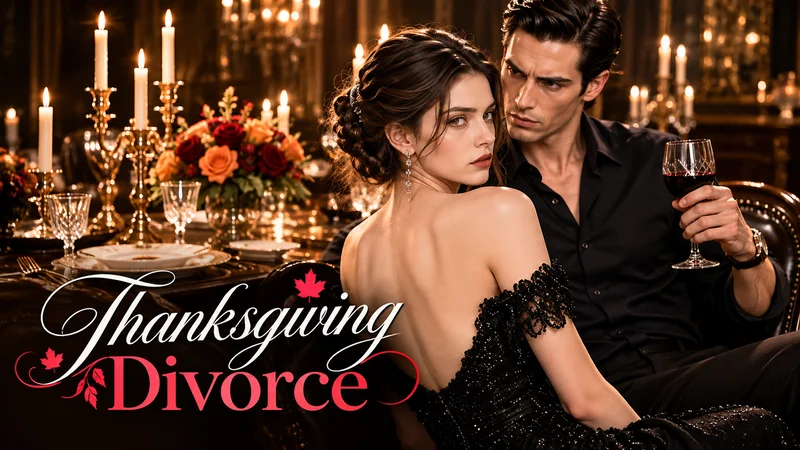
A Thanksgiving Divorce review should answer a simple question: is this marriage-breakdown short drama worth your attention? The public synopsis gives it a pointed hook. Evelyn spends three years trying to belong to the wealthy Harrow family, while her husband Vincent repeatedly prioritizes his assistant Chloe. Being excluded from Thanksgiving dinner becomes the final insult, and Evelyn signs divorce papers rather than continuing to plead for respect. The setup offers a clear story about neglect and self-respect, although the available descriptions do not justify a rating of the actual screen performances.
At ShortMax, we distinguish what a series listing establishes from what only a viewing-based critique can judge. Multiple catalogs identify the title and describe the same three central characters. A VibeShort-branded catalog also carries this premise, while several third-party listings identify 27 short episodes. That provides a reasonable foundation for discussing the advertised story, but not for inventing scenes, dialogue, cast credits, or its final resolution.
This Thanksgiving Divorce review is therefore a source-based editorial analysis, not a claim that we watched all the episodes. We look at the marriage conflict, the holiday setting, the husband’s later request for another chance, and the questions the synopsis leaves unresolved. Spoiler note: the discussion covers the publicly described divorce and Vincent’s subsequent reversal of fortune, but not an independently verified ending.
The Story Established by Public Listings
The core premise is unusually specific for a short-drama synopsis. Evelyn has spent three years trying to earn acceptance in the Harrow household. Vincent is her husband, and Chloe is his assistant. According to the descriptions, Vincent repeatedly puts Chloe ahead of Evelyn, making the marriage feel unequal well before the holiday incident. Thanksgiving adds one decisive act of exclusion: Evelyn is left out of the family’s dinner, and she chooses to leave.
The advertised second phase changes the balance of the relationship. After Evelyn signs the divorce papers and walks away, Vincent loses what he once relied on and begs her for a second chance. The listings frame the remaining question as whether she will consider returning. They do not establish what specifically causes his losses, how much time passes, or what answer Evelyn ultimately gives. Those are important omissions for anyone hoping to find a full ending explanation.
Several catalog pages describe the title as a 27-episode vertical drama associated with modern romance, wealthy-family conflict, and marriage. That is useful format information, but catalogs attach different platform labels to it, including VibeShort, ShortTV, and StoryReel. Without a matching original release record, we cannot identify one of those labels as the definitive original distributor or promise identical edits across listings.
Why Thanksgiving Is Evelyn’s Breaking Point
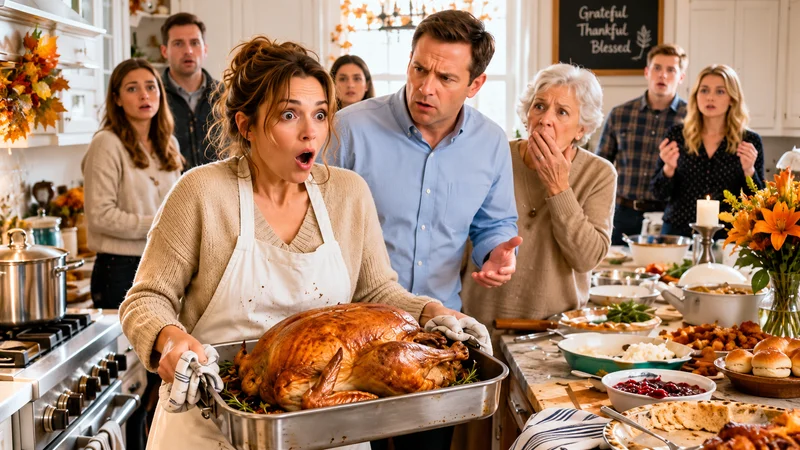
Thanksgiving normally represents inclusion: an invitation to a family table signals that someone belongs. In the published premise, Evelyn’s exclusion makes a private problem publicly legible. She has already endured years of being treated as less important than Chloe. Missing the family gathering becomes a recognizable symbol of that pattern rather than an isolated scheduling disagreement.
This choice gives the story a meaningful emotional trigger. A character’s decision to divorce can feel sudden when the audience hears about only one incident. Here, the three-year history described in the synopsis changes how the holiday event reads. The dinner is presented as the last example of repeated disregard, not necessarily the single cause of the marriage’s collapse. A Thanksgiving Divorce review can assess that logic in the premise while leaving open whether the episodes convincingly dramatize the earlier years.
Vincent Harrow: Favoritism Before Regret
Vincent’s role in the synopsis is defined by repetition. He does not merely forget one occasion; the description says he regularly favors Chloe over his wife. That establishes an imbalance Evelyn has been asked to tolerate. Because the relationship is presented through a brief synopsis, however, it remains unclear whether Vincent understands the harm before the divorce or whether the episodes give him reasons beyond carelessness and entitlement.
His later plea raises the most important moral question in a Thanksgiving Divorce review: does regret mean someone has changed? The advertised storyline links his request for reconciliation to losing everything. Such timing invites skepticism. A request made during personal crisis may be sincere, self-interested, or a mixture of both. The distinction would depend on actions and dialogue that cannot be verified from the available summary.
Chloe’s Place in the Marriage Conflict
Chloe is repeatedly identified as Vincent’s assistant and the person he places ahead of Evelyn. That is the extent of the dependable character information in the descriptions consulted. It would be inaccurate to assert that Chloe is his secret lover, that she engineers the holiday exclusion, or that she suffers a particular punishment. None of those plot developments is established by the matched listings.
Her role nonetheless helps define the core problem: Evelyn is expected to remain a wife while observing that someone else receives priority. The conflict might involve romantic betrayal, inappropriate boundaries, emotional dependence, or a different workplace relationship. A careful editorial analysis does not choose among these possibilities without evidence. The significance of Chloe comes from Vincent’s repeated decisions, not from an invented account of her intentions.
Why the Divorce Matters More Than a Revenge Reveal
The synopsis presents Evelyn’s departure as a deliberate choice. She signs the paperwork, leaves the Harrow family behind, and stops competing for a place she has spent years trying to earn. This shifts the premise from a familiar neglected-wife setup toward a question of agency: what changes when the person who has been overlooked finally refuses the arrangement?
For readers of this Thanksgiving Divorce review, it is worth separating two kinds of satisfaction. One comes from watching a previously dismissive partner face consequences. The other comes from seeing a neglected person establish boundaries and a life no longer organized around winning approval. A related editorial discussion in I Woke Up Before My Wedding to Expose My Sister review considers how another bride responds to betrayal before a wedding, offering a useful comparison of personal agency without suggesting that the two stories share characters or an ending. The public premise supports both possibilities as themes, but reveals too little of Evelyn’s later experience to say which receives greater emphasis on screen.
A complete Thanksgiving Divorce review would have to examine whether the drama makes space for accountability, whether Evelyn can make an independent choice, and whether reconciliation is treated as an entitlement or an option. The listings stop at the question of her response. We cannot turn that open ending into a confirmed reunion, refusal, or new romance.
What the Available Evidence Cannot Tell Us
A detailed premise is not a substitute for watching scenes. Although several sites reproduce the same character summary, repetition across pages does not independently confirm every production detail. There is no reliably matched actor-role credit list in the material reviewed, and no verified scene record on which to score directing or performance.
- Acting: Evelyn, Vincent, and Chloe are identified as characters, but the performers playing them are not reliably confirmed.
- Pacing: Listings provide an episode count, not a dependable basis for judging whether confrontations feel rushed or earned.
- Visual storytelling: The public descriptions cannot demonstrate camera work, editing decisions, or the handling of the Thanksgiving sequence.
- The ending: Vincent asks for forgiveness, but Evelyn’s final choice has not been verified.
- Distribution: Catalogs disagree in their platform attribution, so a single official source and region-specific viewing conditions remain to be confirmed.
For that reason, this Thanksgiving Divorce review does not award stars or claim that a performance is moving, a villain convincing, or a finale satisfying. Such verdicts require evidence of the work as presented to viewers. The absence of that evidence is a limit of the review, not a criticism of the drama.
Format, Episode Count, and Finding the Right Version
Multiple public catalogs list 27 episodes, generally brief installments. That makes this a serialized short drama in the versions those catalogs describe, not necessarily a conventional feature-length movie. Some pages also advertise a combined or continuous viewing experience, but a compilation’s runtime should not be confused with an officially documented original runtime. Total-duration figures also vary between sites.
When looking for the title, check the episode list, original credits, and language controls on the page you actually use. A listing’s claim that a series is free, complete, or subtitled should not be assumed to apply to every service or to viewers in the United States. This Thanksgiving Divorce review focuses on the story information, not a guarantee of where or under what terms the episodes can be streamed.
Who Is Likely to Be Interested in This Drama?
Based on the verified premise, the strongest match is someone interested in relationship drama involving social exclusion, wealthy-family pressure, divorce, and the possibility of belated remorse. The decision to leave is as central to the advertised story as the husband’s later attempt to reconcile. Readers who enjoy character choices more than a mystery about a hidden identity may find that setup appealing.
It may be a less suitable pick for someone seeking a light Thanksgiving comedy, a legally detailed divorce procedural, or a confirmed happily-ever-after romance. Nothing in the synopsis establishes those experiences. An editorial analysis grounded in promotional evidence should help set expectations without promising a genre payoff it cannot substantiate.
Frequently Asked Questions
What is Thanksgiving Divorce about?
Evelyn leaves her marriage to Vincent Harrow after years of feeling sidelined, with exclusion from the family Thanksgiving dinner acting as the final turning point. Vincent later suffers a reversal of fortune and seeks reconciliation. That is the premise described by multiple matching catalog listings.
How many episodes are listed?
Several catalogs identify 27 short episodes. The original distributor’s definitive episode and runtime record has not been independently established here.
Do Evelyn and Vincent get back together?
The accessible synopses leave that question open. A specific answer would require a verified account of the final episodes.
Final Thoughts
This Thanksgiving Divorce review finds a distinctive premise in the sources: a woman stops asking to be included after three years of unequal treatment, and her former husband wants her back only when his circumstances collapse. The holiday exclusion provides a concrete turning point, while his later regret creates a question about accountability rather than an automatic romance. That is enough to explain why the story may interest fans of divorce-and-redemption dramas. It is not enough to rank the acting, certify the ending, or assign a viewing-based score. The most defensible verdict remains an engaging advertised conflict, with the screen execution still unverified.

Bruno Carick is a dedicated content writer at ShortMax, specializing in short dramas, trending series, and engaging storytelling. He delivers thoughtful reviews, fresh entertainment insights, and reliable recommendations to help viewers discover their next favorite stories.